


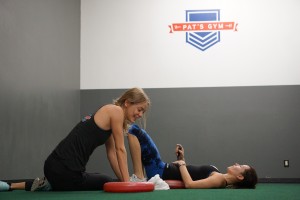
 Anyone who trains hard knows that recovery can be a difficult aspect to manage. It is very common that recovery is skipped because of time and excuses. We always say that recovery is 50 percent of the training process. For that reason alone, it has to be a priority. I have gone over the importance of recovery in the past but want to give you some recovery workout guidelines that are important to use in your program.
Not everyone should have the same recovery workout. For example, I have a lengthy training history, so for a recovery workout I may do five sets of a 1-6 pull-ups and push-ups ladder followed by 100 deadlifts at 30 percent 1RM. This would not be a recovery workout for a beginner and might actually make them extremely sore.
A similar example would be using Adam’s running recovery workout. He could do a 60-minute run as a recovery workout but for someone who doesn’t run, this would be extremely difficult.
When doing a recovery workout, remember the purpose is to promote overall recovery. You can’t go “all out” on every workout, every day. You need to find balance in your training. When doing a recovery workout, I like to group them into different categories.
Repetitive Movements – Light loads of the same movement with perfect form can be good for blood flow. One of my favorite recovery workouts is 100 Turkish get-ups.
Light Aerobic Cardio – Easy biking, rowing and swimming are great examples. Sixty minutes or fewer is a perfect amount of time, and this needs to be an extremely light pace.
Technique – Work on a certain movement like an Olympic lift. Examples include cleans and snatches. Using light weights can always be a good time to perfect your deadlift as well.
When I set up recovery workouts, I have to pay attention to the workout we did the day prior and will do the day after. You would not do light pressing for push-ups for recovery if the day before you had done some heavy pushing and pressing. The same rule applies if you are doing heavy pushing or pressing the following day.
Use a foam roller as much as possible for self-massage. The foam roller helps in stretching and separating muscle and fascia under pressure. The more painful rolling out certain areas is, the more your tissue is bound-up. When it is bound up, it is used less efficiently in your sports.
When you roll out every day, it makes it more effective to get deep tissue massages because they won’t waste time releasing knots and tension and can work on deeper, structural issues. Areas we have great success in rolling out include the IT bands, quads and calves. Feel free to use it on your entire body though. Using the foam roller several hours after training is more beneficial in terms of recovery than using it immediately following a training session.
Something to remember is that your body will adapt to recovery practices like it does with any training load. It is important to change your recovery practices based on changes in your training volume and intensity. Remember the harder the work, the more intensive recovery you need.
Lifting can be a great recovery technique not only for a weightlifter but an endurance athlete as well. It is important because the work stimulates a hormonal response that will speed up recovery. That response increases testosterone and growth hormone secretion. Just stay away from complex movements that stress the nervous system more.


