

 Most people think that taking antioxidants will help you in all regard to health, even with relation to becoming faster, stronger and bigger. But recent studies have raised questions about this premise. The studies are more pronounced for runners and other endurance athletes, but there is evidence that they even negatively impact weight lifters.
People equate working out to causing tissue damage. So, it seems to be a logical conclusion that antioxidants (such as vitamin A and C) would lessen some of the damage and soreness after exercises. The logical conclusion is to take more antioxidants to workout more.
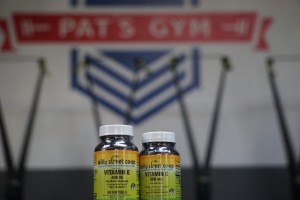
But, there are recent studies that show large doses of vitamins C and E result in slightly less positive training responses. To understand these studies, you first have to understand mitochondria. It helps to create cellular energy and, therefore, allows people to exercise longer and stronger. Large doses of vitamins C and E in athletes lowers the levels of mitochondria. With less mitochondria, there is less energy and strength in athletes to power through tough situations. Early studies, as noted, looked at endurance athletes such as runners and cyclists.
A new study looked at weight training. Weight training involves a different type of biochemical process in the muscle, but it seems the same principles apply. The study concluded that if a weight training athlete takes too much vitamins C and E, they will negatively impact strength of a muscles although not so much with regard to size.
The reason for the cause of this conclusion is not known. There is speculation which I find interesting. A biopsy of the weaker muscles showed reduced levels of a substance that is known to initiate protein synthesis. Protein synthesis is necessary to repair and strengthen muscles after weight training. So the conclusion is that large doses of vitamin C and E (antioxidants) will not allow your muscles to get enough of a repair response and, therefore, will recovery less.
The team performing this research believed that the reduction of free radicals after exercise, short-circuited vital physiological processes. In this case, some of the free radicals that were reduced were those needed for muscle repair.
Therefore, my advice to you is don’t use high dosages of antioxidants if you are involved in an endurance sport or if you are a weight lifter. Small amount are good, but large are not. However, if you have a deficiency of antioxidants, I recommend seeing a physician and taking her advice.


