


If you want to be good at something you need to do it every day and be fully dedicated. That is exactly what I did last year when I trained for cycling. My goal was to win the state championship and I knew it would take some serious planning and dedication.
If you know me, you know how much I enjoy lifting weights. So when I signed up for a year of cycling I had to put my ego aside and spend numerous hours on my bike instead of destroying myself in the gym. The goal of a cyclist is to increase power to weight ratio (power without putting on weight or mass). Many cyclists stray away from weight lifting from fear of gaining muscle mass or injuring themselves. If you lift the correct way you can have many benefits that will help with your cycling.
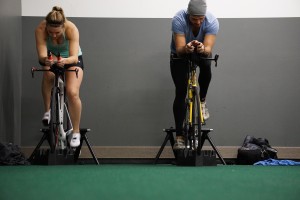
Here are some key points when setting up a cycling training plan:
- Stick with low reps and heavy weight to increase strength without increasing mass.
- You will never get injured in the gym with proper lifting, leaving your ego at the door and reading your body.
- The big lifts cyclists should include: back squats, front squats, deadlifts and overhead squats.
- If you are sore from lifting weights during your season, you did it wrong. This should be a good rule for all endurance athletes.
- You should never sacrifice quality training on the bike for weightlifting. Your biggest gains will be from doing the actual sport itself.
When setting up a cycling training regimen you need to figure out how many cycling hours, gym hours and recovery hours are needed. My main focus is on what I did in the gym during the season. Each program needs to be individualized and remember there are several factors in writing a program so don’t just randomly follow something off the Internet. Training history, experience, tolerance, time, resources and many more factors all need to be taken into account.
Some of my main goals during the season included:
- Increase postural strength (connection on the bike and eliminate injury/weakness)
- Accomplished through Turkish get ups, planks, overhead squats and front squats.
- Stay healthy using dynamic stretches with a strength emphasis while correcting imbalances.
- Accomplished through windmills, stiff leg dead lifts, good mornings, box lunges and box squats.
- Increase my sprinting pop (development of explosive muscle).
- Accomplished using heavy lifts with explosive movements directly used after. (Potentiate activation)
Below is a typical cycling training schedule I used throughout the season. I typically was in the gym two-three times a week.
Routine (Monday: Dead lifts. Friday: Front or Back squats):
- Warm-up: wall squats, squats, lunges, single leg dead lifts, squat jumps, windmills and RDLs.
- Front or Back squats/Dead lifts: five sets of 2-3 repetitions at the heaviest weight I could confidently control. 2-5 minute rest in between sets.
- Squat jumps or broad jumps: 3 explosive jumps after each front squat/dead lift set to activate fast twitch muscles.
- 5 minutes of plank, farmer hold, or ring support to mentally reinforce all the postural connections established during lifting.
These sessions should not take more than one hour and you should feel good after them rather than beat down. I also noticed really good activation on the bike sprinting when I did heavy lifting in the morning several hours before I got on my bike.
If you are a cyclist and have zero lifting experience you might not be able to handle as much volume. The only ways to find out is trial and error and see how you feel on the bike. Remember you become what you do so make sure you are enjoying what you sign up for.


